Updated: June 2026 | Category: Wearable Neurofeedback
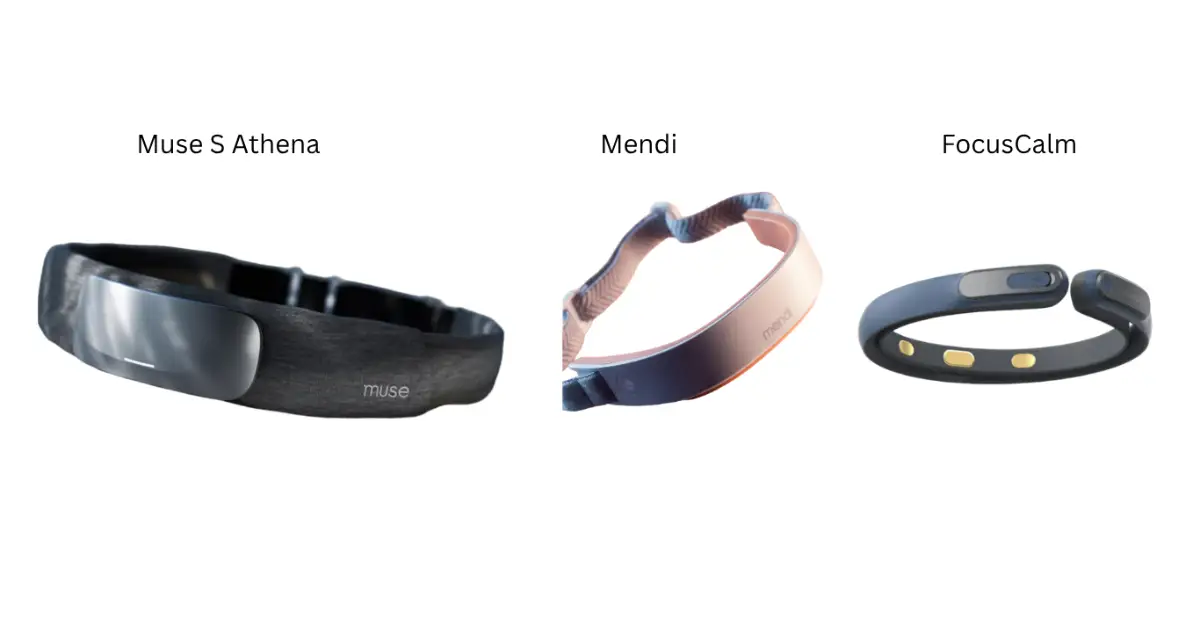
Table of Contents
Disclosure: This post contains affiliate links. If you purchase through our links, we may earn a small commission at no extra cost to you. This never affects our recommendations.
If you are searching for the best neurofeedback headband in 2026, you have three serious options: Muse S Athena vs Mendi vs FocusCalm. Most reviews on these devices were written by people who never wore one. We read the research, checked hundreds of real buyer reviews, and called out the problems even when they make a product look bad. Here’s what we found.
Brain-sensing wearables have moved from research labs into living rooms. Devices like Muse S Athena, Mendi, and FocusCalm all promise to help users train their brains through real-time neurofeedback, but they work differently, target different goals, and cost very different amounts.
If you prefer a supplement-based approach to brain health, see our Gaia Herbs Rhodiola Rosea review or our Neuriva Ultra review for non-device alternatives.
Quick Picks at a Glance
| Muse S Athena | Mendi | FocusCalm | |
|---|---|---|---|
| Best For | Sleep & meditation | Focus & productivity | Stress & budget |
| Price | ~$475 | ~$262 | ~$199 |
| Subscription | ~$12.99/mo | None ever | Optional |
| Technology | EEG + fNIRS | fNIRS | EEG |
Muse S Athena
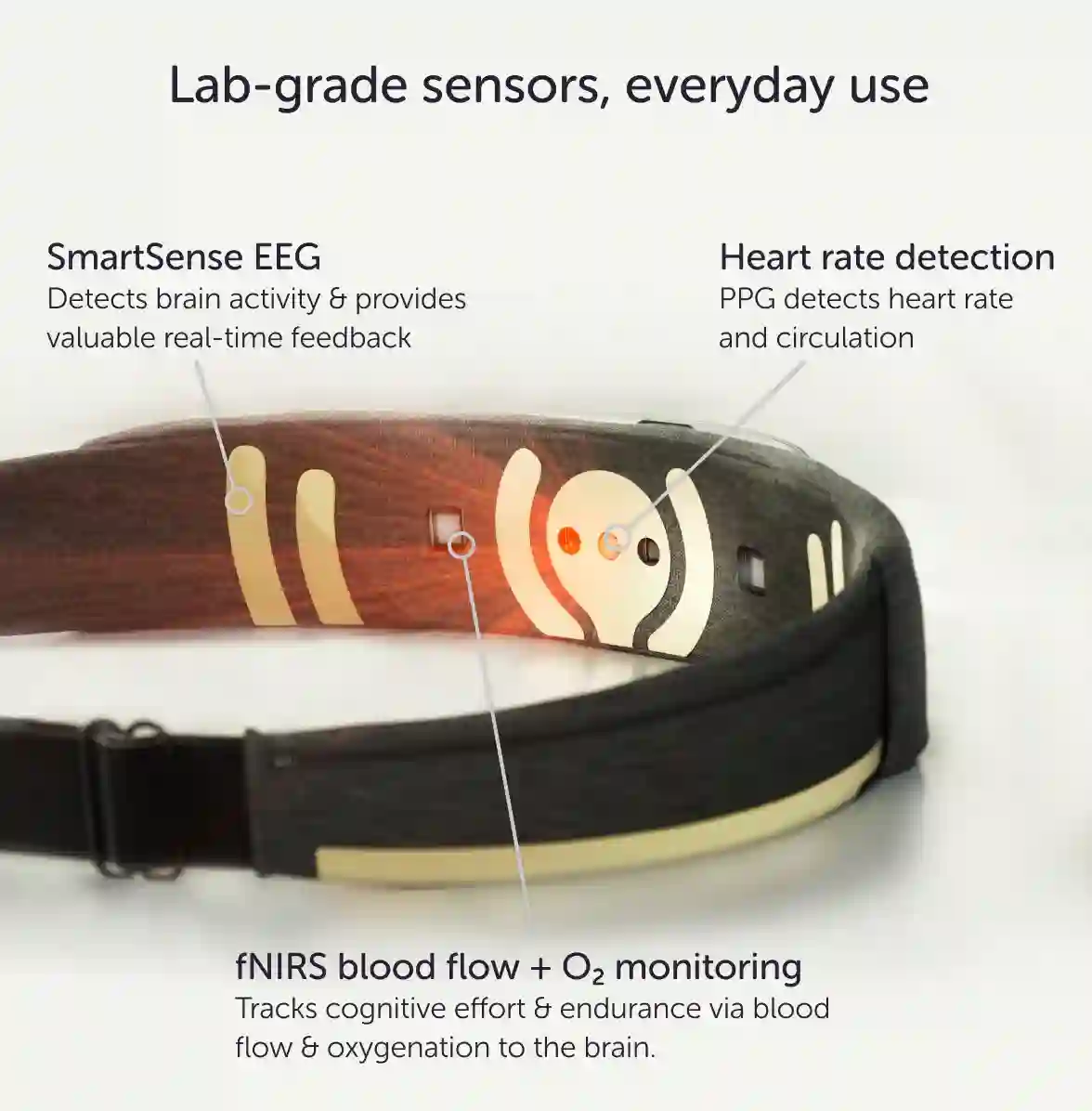
Technology: EEG + fNIRS | Price: ~$474.99 + optional subscription
Released in March 2025, the Muse S Athena is made by InteraXon, a Toronto-based neurotechnology company. It is the world’s first consumer wearable to combine EEG and fNIRS in a single headband. EEG reads your brainwaves in real time. fNIRS measures blood oxygen in your prefrontal cortex. During meditation, the audio responds to your mental state instantly: calm mind, quiet soundscape; wandering mind, the audio shifts. For sleep, Athena tracks stages using actual EEG data, not movement estimates. Three Premium features build on that: Sleep Assist (responsive bedtime audio that fades as you fall asleep), Deep Sleep Boost (quiet tones timed to your slow waves), and Smart Wakeup (alarm at your lightest sleep moment). The Enso AI Coach, also Premium, translates your session data into plain-language recommendations.
The App Experience
The Muse app is the most content-rich of the three devices in this comparison. The free tier covers basic meditation sessions, sleep tracking, and limited breathwork. The Premium subscription (~$12.99/mo or $94.99/year) unlocks the full library, including 500+ guided programs across sleep, stress, focus, and breathwork. The Enso AI Coach reads your session history and gives you personalised recommendations in plain language. External audio integration with Spotify, Calm, and Headspace is also Premium-only. Sessions run 3 to 20 minutes. The app is available on iOS and Android. One important note flagged by users: the app does not allow raw EEG data export at the time of writing, which limits its appeal for users wanting to analyse their own data independently.
Expert View
Dr. Rébecca Robillard, PhD – clinical neuropsychologist and co-chair of the Canadian Sleep Research Consortium – noted at Athena’s launch that the device’s remote access to raw and scored EEG data opens new opportunities to explore the sleeping brain at scale in the field, with particular interest in the fNIRS and SpO₂ features. Also reviewed hands-on by CNET.
What Real Buyers Say
Verified Amazon buyer BR used it for 10 minutes before stressful tasks and described feeling more steady after, concluding: it is not magic but it does what it says it will. Felipe Guarin, upgrading from an older Muse, said the fNIRS addition is noticeably better and the brain training games are actually challenging. Amazon buyer MKF noted the insights feel more personal and actionable than other sleep trackers tried, though flagged the battery life as a limitation.
The negatives from verified buyers are also consistent. Users with longer hair report frequent sensor disconnections, as hair strands interfere with skin contact. Reddit user Excellent-Choice-503 noted that fNIRS turns off during sleep to save battery, so overnight tracking is EEG only. Amazon buyer Brian Szucs (2 stars) was direct: the technology helped his meditation practice but the physical build failed after 3–4 months of careful daily use. Multiple buyers flagged the subscription as poorly communicated – the hardware price does not make clear that core features require ongoing payment. Side sleepers specifically report the headband pressing uncomfortably against ears. And some buyers found the Deep Sleep Boost had no effect or made their sleep worse.
Our Take
Muse S Athena rewards committed users who are realistic about what it is. If meditation awareness and detailed sleep data are your priority and you’re prepared to pay hardware plus subscription, nothing else in this comparison comes close. If you are buying it mainly for sleep tracking, go in, knowing the accuracy is not always consistent.
Pros
- World’s first consumer EEG + fNIRS combination
- EEG-based sleep staging – more detailed than movement-based trackers
- Real-time meditation feedback builds genuine self-awareness over time
- Enso AI Coach makes brain data accessible in plain language
- Supports multiple user profiles
Cons
- ~$474.99 hardware + subscription – most expensive option by far
- Sensor connectivity issues frequently reported, especially with longer hair
- fNIRS turns off during sleep – overnight tracking is EEG only
- Build quality concerns reported after months of regular use
- Uncomfortable for side sleepers due to ear pressure
- Deep Sleep Boost does not work for all users
Mendi
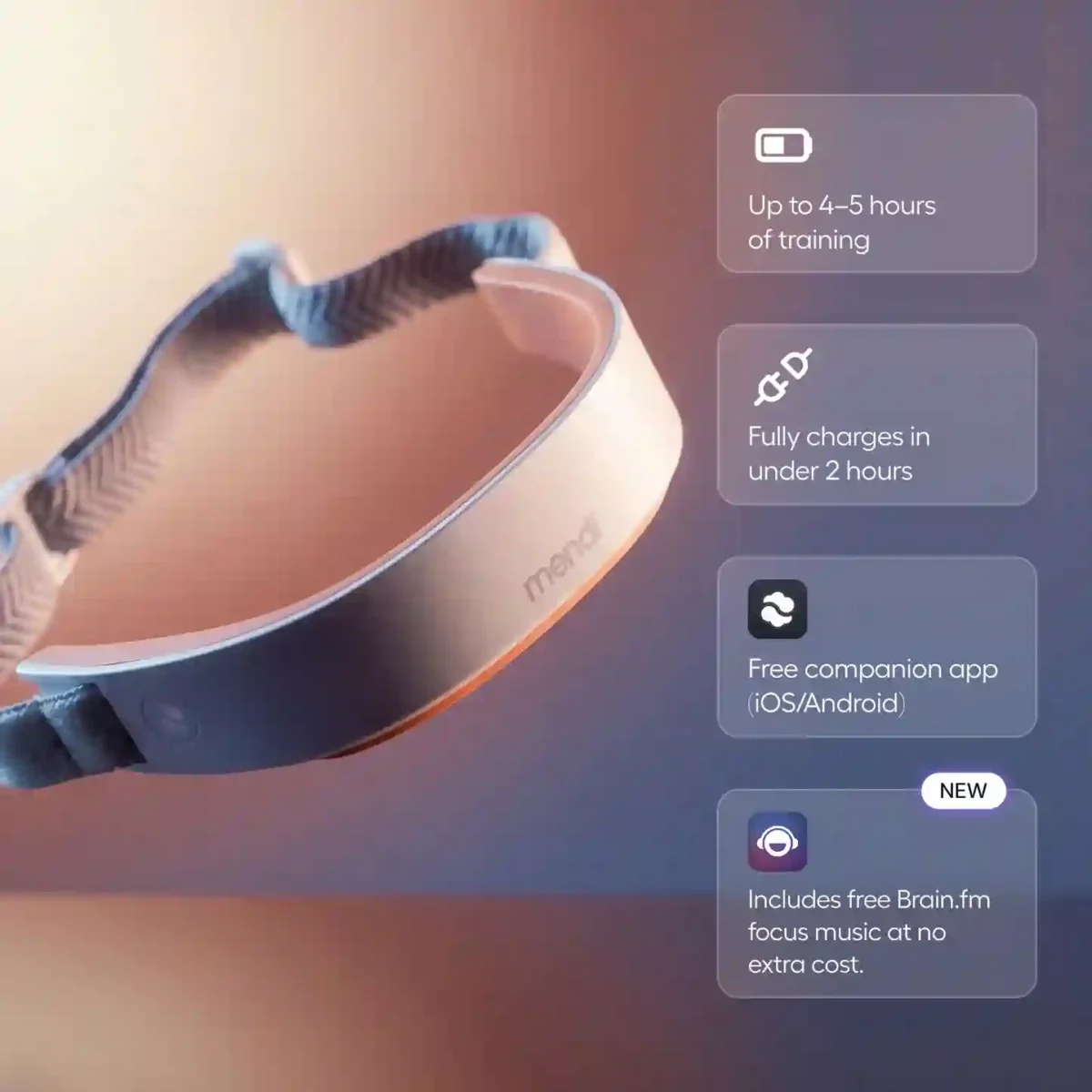
Technology: fNIRS | Price: ~$261.75 (on sale from $349) | No subscription
Mendi is a Swedish neurofeedback headband built around one clear goal: training your brain’s ability to focus. Unlike FocusCalm, which uses EEG, Mendi uses fNIRS – functional near-infrared spectroscopy. It shines near-infrared light through your skull and measures blood oxygen and blood flow in the prefrontal cortex, the part of the brain responsible for attention, decision-making, and emotional regulation. When your prefrontal cortex is more active, blood flow increases and the device registers that in real time.
The training itself is deliberately simple. You put the headband on your forehead, open the app, and control a game with your brain – an object moves upward as your prefrontal cortex activates. Ten minutes a day. No meditation experience required. No guided content library to navigate. No subscription fee. Mendi sells the device and the app access is included for life. That simplicity is both its biggest strength and its main limitation.
Mendi’s development received funding from the European Union’s Horizon 2020 research and innovation programme, which gives it more scientific credibility than most consumer neurofeedback devices. After 8 weeks of daily training, Mendi’s own aggregated data from thousands of users shows 42% improvement in sustained focus, 31% reduction in perceived stress, 16% improved mood, and 51% better general wellbeing. These are self-reported outcomes measured using validated scales including ACS, WHO-5, PSS-10 and GAD-7 – not independent clinical trials, but a more rigorous methodology than most consumer wearable brands publish.
The App Experience
The Mendi app tracks your live brain signal, gives you a session focus score, shows your progress week by week, and provides personalised insights based on your training patterns. There is streak and habit tracking built in. The app is available on iOS and Android and connects to the headband via Bluetooth. A recent addition worth noting: Mendi now includes free Brain.fm focus music at no extra cost, a neuroscience-backed audio tool typically sold as a separate subscription. Battery life is 4 to 5 hours of training with a full charge taking under 2 hours. One honest limitation flagged by multiple users: the app is functional but bare. There is essentially one training game and limited configuration options. Users looking for variety, guided content, or deeper analytics will find Mendi limiting compared to Muse S Athena.
What the Experts Say
Mendi’s science page features endorsements from four independent researchers. Dr. Lauren Silbert, PhD, neuroscientist at Princeton University, states that neurofeedback brain training has been proven to help with a wide range of cognitive functions – from focus and stress, to sleep and mood disorders, and that consistent training can be used by anyone to improve their brain’s physical health. Dr. Francesco Bez, PhD, neuroscientist at Lund University, notes that good blood flow in the prefrontal cortex has been correlated with better health, memory and high performance, and that a more connected brain can slow the onset of cognitive diseases. Perhaps most notably, Mendi’s technology was evaluated by NASA – Dr. Alan Pope, Distinguished Research Associate at NASA, and Terry Rector, Senior Project Leader at The Aerospace Corporation, both cited fNIRS neurofeedback as a key component of future brain training research for astronauts.
The full science breakdown is available on Mendi’s science page.
What Real Users Say
Trustpilot shows 3.6 out of 5 from 73 reviews, with 67% at 5 stars and 14% at 1 star. The positive pattern is consistent: users who commit to daily sessions over several weeks report real improvements in focus, stress management and emotional regulation. Chajan Sathiyeswaran, a 2.5-year user, wrote that colleagues at his hospital started using it during breaks after noticing his improvements in concentration and mental clarity. Richard G noted the benefits built slowly over 3–4 weeks with no placebo hit, but that even lower-scoring sessions delivered the focus benefits he was after. Lilly from California used it for 50 sessions and reported a 90% reduction in a nervous eye tick she had since childhood.
The negative pattern centres on two issues: Bluetooth connectivity problems on first setup (Mendi attributes this to Bluetooth permissions not being fully enabled) and the app feeling unfinished. Gil Haberman described the app as built in one week and never improved. Vincent noted the ball responds to head movement, not just mental focus – meaning you must sit completely still for accurate readings, which Mendi themselves confirm in their usage guidelines. Some 1-star users felt no benefit after a month of use and found the returns process confusing, though Mendi’s customer support actively responds to every negative review on Trustpilot.
Our Take
Mendi is the easiest device in this comparison to build a daily habit with. No subscription, no learning curve, productive from session one. The science behind fNIRS for consumer focus training is thinner than EEG for meditation, and we won’t pretend otherwise. The app needs work. But for someone who wants a daily 10-minute brain training session without complexity or ongoing fees, Mendi delivers what it promises – if you commit to consistency. Benefits do not come in week one.
Pros
- No subscription – one-time purchase with lifetime app access
- Includes free Brain.fm focus music at no extra cost
- Backed by EU Horizon 2020 research funding
- Gamified training is highly engaging and beginner-friendly
- 72,000+ users globally with published outcome data
- 60-day money-back guarantee
- Good customer support – replies to every review and resolves issues
- Portable and simple – sensors auto-calibrate in seconds
Cons
- App is basic – limited games, minimal configuration, no guided content
- Bluetooth connectivity issues reported on first setup
- Must sit completely still – any head movement affects readings
- No sleep tracking
- fNIRS has less peer-reviewed consumer evidence than EEG
- Results take 3–4 weeks – no quick wins
- Ships from Sweden – delivery takes longer for US buyers
FocusCalm
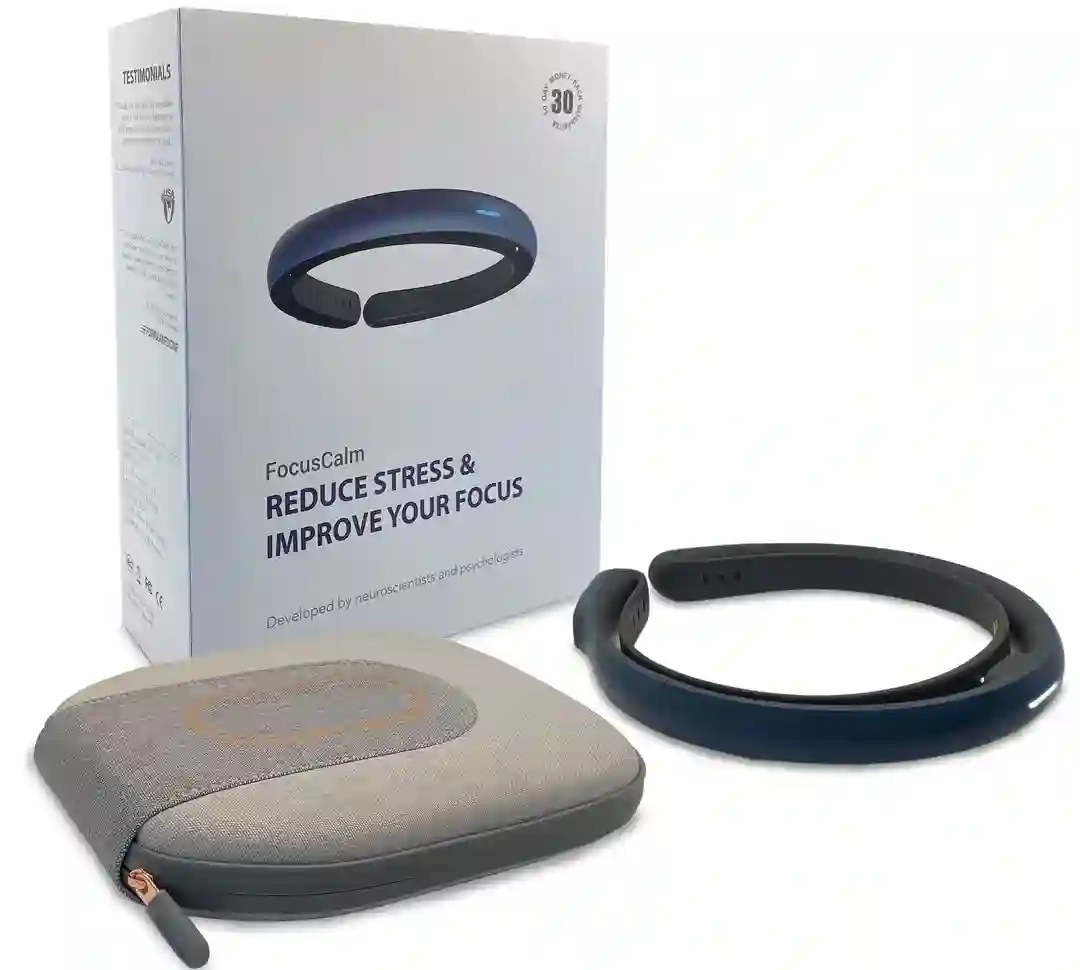
Technology: EEG | Price: ~$199 hardware + $9.99/mo or $149.99 lifetime subscription
FocusCalm EEG headband made by BrainCo, a company founded in 2015 and incubated at the Harvard Innovation Lab by a team of engineers and neuroscientists. It reads brain activity through EEG sensors and distils your mental state into a single number: the FocusCalm Score, ranging from 0 to 100. The higher the score, the calmer and more focused your brain. The device monitors up to 1,250 EEG data points per second, a respectable sensor rate for a consumer device at this price point.
One practical advantage of FocusCalm is that it is designed for eyes-open use. You do not need a quiet room or a meditation posture. You can run a session while sitting at your desk, which makes it genuinely usable during a workday. Sessions typically run 7 to 15 minutes, with the device buzzing gently to alert you when sensors need repositioning.
The app includes brain training games, guided meditations, and breathing exercises. Subscription options are $9.99 per month, $69.99 per year, or $149.99 for lifetime access. The lifetime option makes the most financial sense if you plan to use the device long-term, since it brings your total cost to roughly $350 rather than an ongoing monthly commitment.
The App Experience
The FocusCalm app is available on iOS and Android. It connects to the headband via Bluetooth and displays your FocusCalm Score in real time. The app includes brain training games, guided meditations, breathing exercises, and a history dashboard showing your scores over time. Subscription options are $9.99 per month, $69.99 per year, or $149.99 for lifetime access. The lifetime option brings your total cost to roughly $350 and is the most financially sensible choice for long-term users. The free tier gives you basic score tracking but limits access to most content. One key practical advantage: sessions work eyes-open at your desk with no need for a quiet room or meditation posture, which is genuinely useful for people who want to train during a workday. However, multiple users note the content library becomes repetitive over time and the app has significantly fewer features than Muse S Athena.
Expert and Media Coverage
The BBC covered FocusCalm in October 2021, reporting that the company’s own research showed spending as little as 7 minutes a day with your score above 65 can have a measurable effect on wellbeing. Read the BBC article here. A board-certified Neurofeedback practitioner reviewing the device wrote that it is beautifully made, charges quickly, and connects to Bluetooth almost immediately, which they described as a huge improvement over other devices in the category. The Longevity Technology review praised the battery life, noting only three charges were needed over three months of daily 20-minute use.
What Real Users Say
Positive reviews centre on the sensor quality, battery life, and the simplicity of the scoring system. One Longevity Technology reviewer called it a great starting point for anyone interested in tracking their mental state with more than just time and written notes. The Cactus Seed reviewer, a busy tech executive, found the 15-minute daily session format genuinely manageable and noticed real improvements in her ability to find calm under pressure. However, she flagged connectivity issues as the biggest friction point, noting the device would sometimes refuse to connect until charged, and that sensor positioning on her forehead required patience to get right.
Negative feedback from independent sources centres on three consistent themes. The app content library is thin compared to Muse S Athena, with limited games and exercises that can feel repetitive over time. The subscription adds to the device cost in a way that is not always clearly communicated upfront. And the connection experience varies by user, with some finding it seamless and others spending time troubleshooting before sessions.
Our Take
FocusCalm does something simple well. It gives you real EEG data, a clear score, and a workday-friendly format at the lowest hardware price in this comparison. The Harvard Innovation Lab origin and elite athlete use give it more credibility than a typical budget device. The BrainCo controversy is worth knowing but the independent audit addresses the core concern. If you want genuine brainwave feedback without the complexity and cost of Muse S Athena, FocusCalm is the honest starting point. Power users wanting depth of content and analytics will eventually feel limited.
Pros
- Lowest hardware price in this comparison at ~$199
- Eyes-open format, works at your desk without a meditation routine
- Excellent battery life, reportedly 3 charges over 3 months of daily use
- Harvard Innovation Lab origin, real EEG technology
- Used by elite athletes across MLB, NFL, NBA, NHL and Olympics
- Board-certified neurofeedback practitioners recommend it
- BBC coverage adds credibility for first-time buyers
- Independent cybersecurity audit confirms local data processing
Cons
- Subscription required for full features, adds to total cost
- App content library is limited, games become repetitive
- No sleep tracking
- Connectivity issues reported by some users
- Sensor positioning can require adjustment and patience
- Less analytics depth than Muse S for long-term tracking
- BrainCo/Chinese funding controversy, though independently audited and denied
The Science Behind These Devices
All three devices use neurofeedback, the practice of providing real-time information about brain activity so users can learn to self-regulate. The core principle is well-established in clinical literature, with decades of research backing its use in therapeutic settings. The key difference between these three devices is the technology they use to read your brain.
EEG vs fNIRS: What Is the Real Difference?
EEG (used by Muse S Athena and FocusCalm): Measures electrical brain activity directly through sensors on the scalp. Responds in milliseconds, fast enough to provide real-time meditation feedback. Has the stronger research base for attention and mindfulness training in consumer settings.
fNIRS (used by Mendi, and also combined with EEG in the Muse S Athena): Measures blood oxygen and blood flow changes in the prefrontal cortex using near-infrared light. More stable for tracking sustained focus but has a natural 3 to 5 second delay compared to EEG. Better suited to longer focus training sessions where split-second precision matters less.
This difference has a real impact on how each device feels to use. EEG reacts to changes in your brain activity within milliseconds, so a Muse session gives you immediate feedback the moment your focus drifts. fNIRS measures blood flow, which changes more slowly, so Mendi registers a shift in mental state a few seconds later. Neither is wrong; they are suited to different goals. EEG is the stronger technology for meditation, where instant awareness of distraction is the core benefit. fNIRS is better suited to focus training, where the goal is building sustained attention over time rather than catching moment-to-moment changes.
It is also worth noting that Muse S Athena is the only device here that combines both technologies simultaneously, giving you both the instant EEG response and the metabolic fNIRS picture in a single session.
Research suggests neurofeedback can improve attention, relaxation, stress awareness, and meditation consistency. However, most strong clinical evidence comes from therapeutic EEG settings using medical-grade equipment, not consumer wellness devices. These are wellness tools, not medical devices. Always consult a healthcare professional if you are managing a diagnosed condition.
Full Side-by-Side Comparison
| Feature | Muse S Athena | Mendi | FocusCalm |
|---|---|---|---|
| Technology | EEG + fNIRS | fNIRS only | EEG only |
| Hardware price | ~$475 | ~$262 (on sale) | ~$199 |
| Subscription | ~$12.99/mo | None ever | Optional |
| Real-time feedback | Audio response | Gamified visual | Calm score 0-100 |
| Sleep tracking | Yes, EEG-based | No | No |
| Meditation guidance | 500+ programs | Basic | Good |
| Focus training | Yes | Primary use | Yes |
| Expert endorsements | Dr. Robillard (Ottawa) | NASA, Princeton, Lund | Harvard Innovation Lab |
| Battery life | ~5 hrs active | 4-5 hrs training | ~8-10 hrs |
| Beginner-friendly | Moderate | Very easy | Easy |
| Best for | Sleep + meditation | Daily focus training | Stress + budget |
Final Verdict
None of these devices are magic. They work best as training tools that require consistency, like any form of exercise. The hardware alone will not change anything. But for users willing to build a daily habit, all three offer a legitimate window into real-time brain activity that no smartphone app can replicate.
Choose Muse S Athena if:
Sleep tracking is your main goal, or you want the most complete brain training ecosystem available. You are prepared to pay the hardware cost plus an ongoing subscription and you understand the total cost before you buy. Best for meditators, light sleepers, and people who want deep data on both their mental state and sleep quality.
Choose Mendi if:
Focus, brain fog, or procrastination is your primary issue. You want a device that is dead simple to use every day with no subscription ever. You are willing to commit to 3 to 4 weeks before expecting results. Particularly well suited to people with demanding cognitive jobs, students, and anyone managing ADHD symptoms who wants a non-pharmaceutical daily habit.
Choose FocusCalm if:
Budget is your priority and you want real EEG feedback for stress reduction without paying a premium price. You are a beginner who wants to understand your brain without complexity. The smaller content library and fewer analytics will not bother you if your goal is simply to feel calmer and less reactive.
How Long Before You Notice Results?
- Muse S Athena: Most users report calmer meditation and improved sleep onset within 2–4 weeks of daily 10–15 minute sessions.
- Mendi: Improvements in sustained attention typically emerge after 3–6 weeks of daily 10-minute sessions.
- FocusCalm: Noticeable stress reduction generally appears within 2–3 weeks of consistent daily use.
These are general estimates, not guarantees. Results vary based on baseline stress levels, consistency, and individual differences.
Who Should Skip All Three
These devices are consumer wellness tools. If you’re dealing with a diagnosed condition – ADHD, anxiety disorder, PTSD, depression, or a sleep disorder – consumer neurofeedback headbands are not a substitute for clinical care. Licensed neurofeedback therapists use medical-grade equipment with far more sensors and protocols tailored to your specific needs.
Similarly, if you’re hoping for dramatic cognitive enhancement, temper expectations. Where these devices genuinely shine is as consistency tools: they make meditation more engaging, give you real data on your progress, and reduce the friction of building a daily mental wellness habit.
FAQs
Do these devices actually work?
Yes, with caveats. The neurofeedback principle is backed by decades of clinical research. What is less certain is how effectively consumer-grade devices replicate clinical results at home. Mendi publishes aggregated user data showing 42% improvement in sustained focus after 8 weeks. Muse S Athena reports 55% faster sleep onset from Sleep Assist users. FocusCalm cites internal research showing 7 minutes daily above a score of 65 has a measurable effect on wellbeing. These are company-reported figures, not independent clinical trials. Most users report genuine improvements with consistent use, but results vary and are not guaranteed.
What is the difference between Muse S Athena and the older Muse S?
The Muse S Athena, released March 2025, adds fNIRS sensors to the original Muse S EEG headband. This means Athena tracks both brainwave electrical activity and blood oxygen levels in the prefrontal cortex simultaneously. The Athena also uses a 14-bit sensor resolution compared to 12-bit in older models, and features the Foundational Brain Model AI trained on 80,000+ EEG recordings. If you already own the original Muse S, the Athena is a meaningful step up rather than a minor refresh.
Do I need meditation experience to use these?
No. All three devices are designed for beginners. Mendi is the most beginner-friendly with a simple gamified format requiring no prior knowledge. FocusCalm works eyes-open at a desk. Muse S has the steepest learning curve of the three but still provides guided sessions from day one. None require you to know how to meditate.
Which device is best for focus and productivity specifically?
Mendi is purpose-built for focus training and is the clearest recommendation for this goal. Its fNIRS sensor directly targets the prefrontal cortex, the region responsible for attention and decision-making. FocusCalm also targets calm and focus through EEG. Muse S Athena has focus training features but its primary strength is sleep and meditation rather than daytime productivity.
Can I use these if I have ADHD or anxiety?
You can, but consult your doctor or therapist first. Neurofeedback has genuine clinical research for ADHD, but that research uses medical-grade equipment under professional supervision. Mendi has been reported by users to help with ADHD symptom management. These devices may complement an existing treatment plan but should not replace professional care.
Is the Muse S Athena subscription worth it?
The free tier covers basic meditation and some sleep tracking, enough to evaluate whether the device suits you. The Premium subscription at ~$12.99 per month or $94.99 per year unlocks Smart Wakeup, the Enso AI Coach, external audio integration, and the full content library. If you are buying Athena primarily for the sleep features, Premium is effectively required. Try the free tier for at least two weeks before committing.
Is FocusCalm safe given the BrainCo controversy?
FocusCalm has directly addressed the 2025 investigation alleging Chinese government funding and brain data collection. Their position is that all biometric data is processed locally on the user’s device and never transmitted to external servers. An independent US cybersecurity firm, Assured Information Solutions, completed a formal audit confirming this. The products are stated to have no military applications. We recommend buyers read both the investigation and FocusCalm’s full documented response before deciding.
Can I use these with brain supplements?
Some users combine neurofeedback training with brain supplements as part of a broader cognitive wellness routine. Adaptogens like Gaia Herbs Rhodiola Rosea target stress and mental fatigue directly, while products like Neuriva Ultra focus on longer-term brain health support. There is no clinical evidence that combining these with neurofeedback produces better results than either alone, but they target different mechanisms and are not known to conflict.
Medical disclaimer: These devices are consumer wellness products, not medical devices. They are not approved to diagnose, treat, or cure any medical condition. If you are experiencing symptoms of a mental health condition, consult a qualified healthcare professional. Prices listed are approximate and subject to change – verify current pricing on each manufacturer’s website before purchasing.
Sources & Further Reading
All research sources and reference links used in this article:
Expert References
Dr. Rebecca Robillard – Canadian Sleep Research Consortium | Mendi Science Page – Princeton, Lund, NASA researchers | BBC – Smart Headbands: Do They Work?
Peer-Reviewed Research
Neurofeedback and attention – PubMed | fNIRS overview – NIH PMC | EEG neurofeedback – Frontiers in Human Neuroscience | fNIRS neurofeedback attention study – NIH PMC
Independent Reviews
CNET – Muse S Athena hands-on review | Cybernews – Mendi review | Longevity Technology – FocusCalm review
User Reviews
Muse S Athena – Amazon verified buyer reviews | Mendi – Trustpilot reviews | FocusCalm – Official reviews page | r/museheadband – Reddit community | r/Neurofeedback – Reddit community