Updated: July 2026
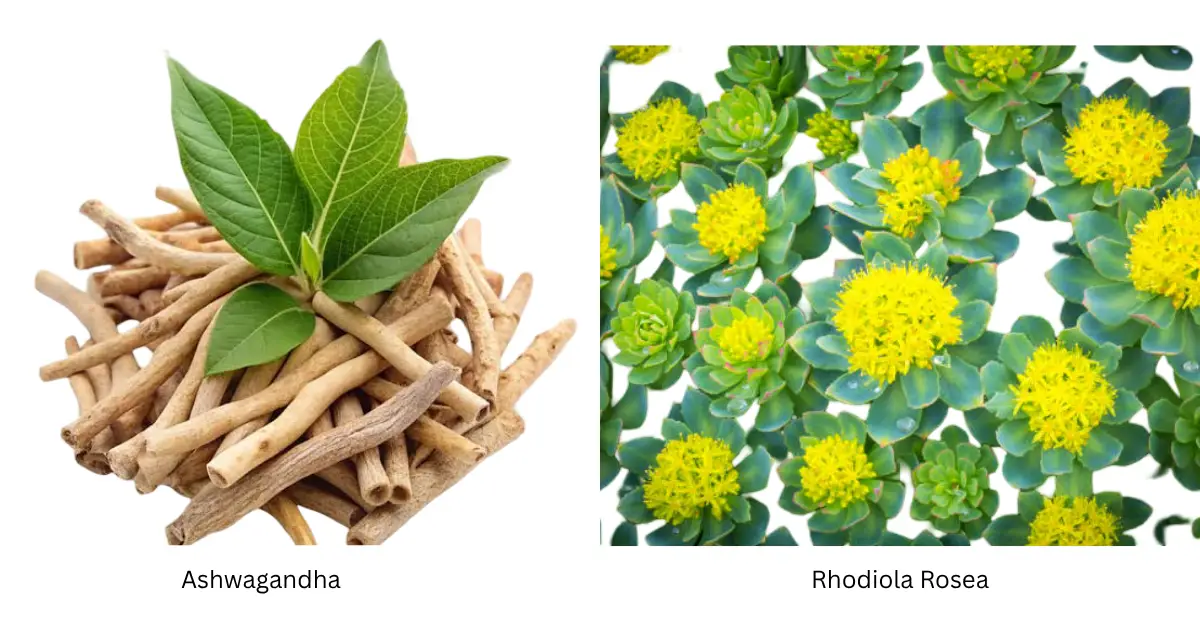
Table of Contents
Have you ever felt two different kinds of tired? One kind is that anxious, buzzy, mind-racing tired, exhausted but unable to sleep. The other is that drained, foggy, no-motivation tired, where you wake up already worn out.
These are two very different problems. And that is exactly why ashwagandha vs rhodiola rosea is not a simple comparison. They are both adaptogens, both help with stress, but they work in opposite directions. One calms you down. The other picks you up.
In this guide, we explain the difference in plain language, walk through the real science, and help you figure out which one fits your situation, or whether you should take both.
Quick Picks at a Glance
| Ashwagandha | Rhodiola Rosea | |
|---|---|---|
| Best for | Anxiety, poor sleep, high stress | Fatigue, brain fog, burnout |
| How it feels | Calming and grounding | Energizing and sharpening |
| Best time to take | Evening or before bed | Morning, not at night |
| Time to feel it | 4–8 weeks | 1 to 3 weeks (faster acting) |
| Active compounds | Withanolides | Rosavins + Salidroside |
| Our recommended product | Gaia Herbs Ashwagandha Root | Gaia Herbs Rhodiola Rosea |
What Is an Adaptogen?
An adaptogen is a plant that helps your body handle stress better, like a thermostat for your stress response. When your body overreacts, an adaptogen helps bring things back to normal. When your body underperforms under pressure, it helps you do more.
Ashwagandha and rhodiola rosea are two of the most researched adaptogens in the world, one from India, the other from Russia and Scandinavia. Both are called adaptogens, but they work very differently inside your body.
What Is Ashwagandha? (The Calming One)
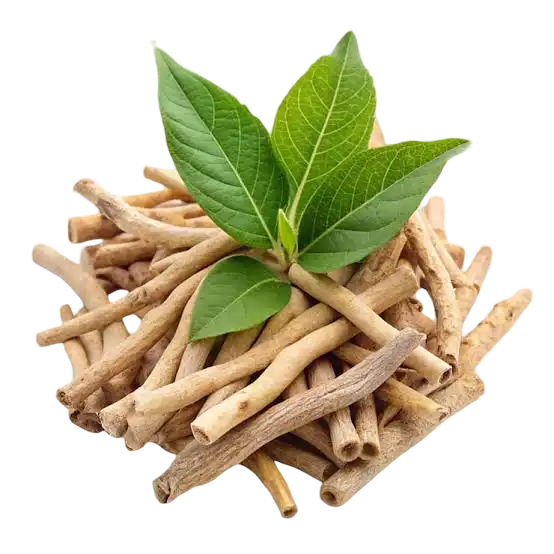
Ashwagandha (Withania somnifera) comes from the root of a plant that grows across India, North Africa, and the Mediterranean. It has been used in Ayurvedic medicine for over 3,000 years.
Its active compounds are called withanolides, natural plant chemicals that tell your stress system to quiet down.
How Ashwagandha Works
Your body has a stress control centre called the HPA axis. When you feel stressed, this system releases cortisol, your main stress hormone. A little cortisol is fine, but staying stressed keeps it too high for too long, causing anxiety, poor sleep, weight gain, and mood swings.
Ashwagandha calms this whole system down. It signals your brain that the threat has passed. Cortisol drops, your nervous system shifts out of fight-or-flight mode, and your body gets a chance to recover.
Best For: Who Should Choose Ashwagandha?
- You feel anxious , your stress is mental and emotional
- You cannot sleep , your mind races at night even when exhausted
- You feel emotionally drained , daily life feels overwhelming
- You want to lower cortisol , your stress shows up as belly fat or mood swings
What Is Rhodiola Rosea? (The Energizing One)
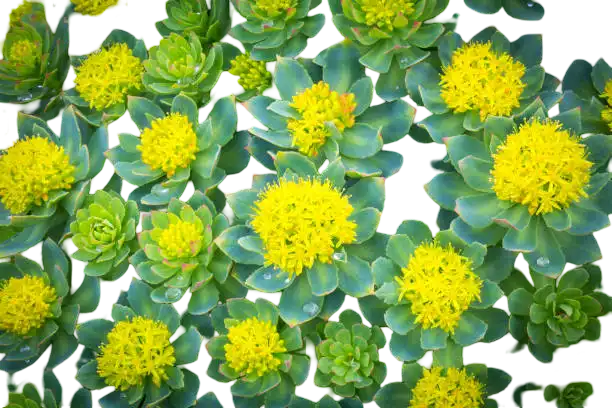
Rhodiola rosea, also called golden root, grows in cold, high-altitude places like Siberia, Scandinavia, and the Arctic. Russian soldiers and athletes used it for centuries to perform better under extreme conditions.
Its active compounds are rosavins and salidroside. Unlike ashwagandha, these do not calm your system down, they help your brain and body perform better under pressure.
How Rhodiola Works
Rhodiola works mostly on brain chemistry, serotonin, dopamine, and norepinephrine, the chemicals controlling mood, motivation, focus, and energy. Burnout depletes these; rhodiola helps restore the balance without sedating you.
Think of rhodiola as an upgrade to your stress tolerance. The pressure does not go away, but your mind and body handle it better.
Best For: Who Should Choose Rhodiola?
- You feel mentally drained or burned out , physically fine, but your brain is empty
- You struggle to focus , brain fog, poor concentration, low motivation
- You are physically active , athletes use rhodiola to fight workout fatigue
- You want faster results: rhodiola can be felt in 1 to 3 weeks vs ashwagandha’s 4–8 weeks
Full Side-by-Side Comparison
Here is every important difference in one table, the same format we use for product comparisons across the site.
| Ashwagandha | Rhodiola Rosea | |
|---|---|---|
| Type of benefit | Calming, reduces the stress response | Energizing, improves stress resilience |
| Primary effect | Lowers cortisol, calms the nervous system | Reduces mental fatigue, sharpens focus |
| How it works | Modulates the HPA axis | Supports serotonin, dopamine, norepinephrine |
| Best use case | Anxiety, sleep problems, emotional burnout | Mental fatigue, burnout, cognitive performance |
| Best time to take | Evening or 30–60 min before bed | Morning or early afternoon |
| How fast it works | 4–8 weeks for full effect | 1 to 3 weeks, faster acting |
| Key compounds | Withanolides | Rosavins + Salidroside |
| 2026 clinical study | Gaia Herbs RCT (PMC12983611) tested this exact ashwagandha formula | Same trial tested a Gaia Herbs multi-herb adrenal blend containing rhodiola |
| Side effects | Mild, stomach upset, drowsiness (take with food) | Mild, irritability if taken late; overstimulation at high doses |
| Who should avoid | Pregnant/nursing women. Check with doctor if on thyroid meds | Bipolar disorder. Check with doctor if on antidepressants |
| Can you combine? | Yes, take rhodiola morning, ashwagandha evening | Yes, natural complement pair |
| Price (approx.) | ~$25 for 60 caps (30-day supply, ~$0.83/day) | ~$20–$25 for 60 caps (30-day supply) |
| Our recommendation | Gaia Herbs Ashwagandha Root | Gaia Herbs Rhodiola Rosea |
What Does the Science Actually Say?
We do not just take supplement brands at their word. Here is what the real research says, in plain language.
For Ashwagandha
A well-known 2019 study found that people taking KSM-66 ashwagandha (a different, more concentrated extract than what we recommend below) for 8 weeks showed a 27.9% drop in cortisol levels compared to placebo. That study is widely cited as strong evidence for the ashwagandha-cortisol mechanism in general, even though it used a specific branded extract.
More directly relevant: a brand-new 2026 randomized controlled trial (PMC12983611) published in the journal Trials (NIH/PMC) was run by Gaia Herbs’ own R&D team, testing their actual full-spectrum ashwagandha formula (standardized to 2.5mg withanolides per serving, not KSM-66) against placebo.
This was a 3-arm trial: 186 participants total, split roughly evenly between this ashwagandha formula, a separate multi-herb blend (covered below), and a placebo group. Per the study’s published conclusion, both active formulas, not just the ashwagandha one, were associated with reduced stress, fatigue, and anxiety, and improved mood and sleep quality, versus placebo. This is real evidence on the actual product recommended in this article, not a different one, just worth being precise that 186 is the total trial size, not the number who received ashwagandha specifically.
For Rhodiola Rosea
Rhodiola has been approved since 2011 by the European Medicines Agency (EMA) as a traditional medicine for stress-related fatigue, based on its long history of use and over 70 human clinical trials.
A 12-week study found that 400mg of rhodiola daily significantly improved anxiety, fatigue, and depression in people with stress-related burnout. The same 2026 Gaia Herbs trial mentioned above also tested a multi-herb adrenal-support blend containing rhodiola rosea alongside holy basil, oat, and schisandra, worth noting this blend is not identical to a single-ingredient rhodiola product, but it reinforces the same stress-reduction pattern.
When to Take Each One, Timing Matters
This is where most people go wrong. Timing is just as important as which one you choose.
| Rhodiola (Morning) | Ashwagandha (Evening) | |
|---|---|---|
| Effect | Mild energizing effect | Calming effect builds over time |
| Why this timing | Taking it late can make it harder to sleep | Taking it before bed helps lower cortisol overnight |
| How to take | With breakfast, 30 min before eating | 30–60 minutes before bedtime |
Taking both? Here is the schedule:
Morning with breakfast → Rhodiola Rosea (energy, focus, performance)
Evening before bed → Ashwagandha (calm, cortisol reduction, sleep)
They work on different parts of your stress cycle, they do not compete with each other.
Can You Take Ashwagandha and Rhodiola Together?
Yes, many people do exactly that, because they target different stages of the day and different parts of the stress response. Rhodiola keeps you sharp during the day; ashwagandha helps you recover and sleep at night.
If you have never taken either before, start with just one for 4–6 weeks to see how your body responds, then add the second if you want broader support.
Which Products Do We Recommend?
We always say the same thing: formula quality matters as much as the herb itself. Here are the two products we recommend, both from Gaia Herbs, one of the most transparent supplement brands in the US, growing many herbs on their own 270-acre Regenerative Organic Certified farm in North Carolina.
A note on extract types:
| For Calm & Sleep (Ashwagandha) | For Energy & Focus (Rhodiola) | |
|---|---|---|
| Product | Gaia Herbs Ashwagandha Root | Gaia Herbs Rhodiola Rosea |
| Extract type | Proprietary full-spectrum blend, HPLC-standardized to 2.5mg withanolides (not KSM-66) | Standardized rhodiola root extract |
| Why we like it | Clean Liquid Phyto-Cap formula, organic, backed by a dedicated 2026 clinical trial | Same farm-to-shelf quality control, EMA-recognized traditional use |
| Price | ~$25 for 60 caps (30-day supply, ~$0.83/day) | ~$20–$25 for 60 caps (30-day supply) |
Gaia Herbs uses its own proprietary full-spectrum extract, not the patented KSM-66 extract some other brands use. If you specifically want a KSM-66 product, look at Pure Encapsulations or Nutricost instead, Gaia Herbs’ advantage is its Liquid Phyto-Cap absorption format, organic certification, and having its own dedicated clinical trial on this exact formula.
If you want to understand how these adaptogens fit into a broader natural energy plan, see our complete plant-based energy supplement guide.
Final Verdict: Ashwagandha vs Rhodiola Rosea
Ashwagandha and rhodiola rosea are not rivals. They are two different tools for two different kinds of stress, and once you understand that, the choice becomes much easier.
| Choose Ashwagandha if | Choose Rhodiola if | |
|---|---|---|
| Anxiety | You feel anxious and overwhelmed | You feel drained, foggy, and burned out |
| Sleep | You cannot sleep even when exhausted | You can sleep fine but have no energy |
| Stress type | Your stress is emotional and mental | Your stress shows up as fatigue and low motivation |
| Goal | You want to lower cortisol | You need to perform under pressure |
| Speed | You need something calming, not stimulating | You want results in 1 to 3 weeks instead of 4 to 8 |
Want both? Take rhodiola in the morning, ashwagandha in the evening.
If you are new to adaptogens: start with ONE for 6 weeks, then add the other.
Both are safe for most healthy adults. Always check with your doctor if you take prescription medication.
FAQs
Is ashwagandha better than rhodiola?
Neither is better overall, they are better for different things. Ashwagandha wins for anxiety, high cortisol, and sleep problems. Rhodiola wins for mental fatigue, burnout, and focus. The right choice depends on what your stress feels like.
Can I take ashwagandha and rhodiola at the same time?
Yes. They are often combined because they work on different parts of the stress response. Take rhodiola in the morning and ashwagandha in the evening. Start with one first if you are new to adaptogens.
Does Gaia Herbs Ashwagandha use KSM-66?
No. Gaia Herbs uses its own proprietary full-spectrum extract, organic ashwagandha root plus a concentrated root extract, standardized by HPLC testing to no less than 2.5mg of withanolides per serving. This is different from KSM-66, a separately patented extract by Ixoreal Biomed standardized to around 5% withanolides. If you specifically want a KSM-66 product, brands like Pure Encapsulations or Nutricost use it instead.
How long does each one take to work?
Rhodiola tends to work faster. Some people notice a difference in 1 to 3 weeks. Ashwagandha typically takes 4 to 8 weeks for the full cortisol-lowering effect to build up. Be patient, these are not quick fixes.
Are there side effects from ashwagandha or rhodiola?
Both are generally well-tolerated. Ashwagandha may cause stomach upset or mild drowsiness, take with food. Rhodiola may cause irritability or disturbed sleep if taken in the afternoon or evening. Do not take either if you are pregnant or breastfeeding. Check with your doctor first if you take thyroid medication, antidepressants, or immunosuppressants.
Which is better for anxiety, ashwagandha or rhodiola?
Ashwagandha is more consistently supported by research for anxiety reduction. It directly lowers cortisol and supports calming pathways in the brain. Rhodiola also helps with anxiety, but its main strength is fighting fatigue and improving mental performance.
Ready to Try One?
For calm, sleep, and lower cortisol:
→ Gaia Herbs Ashwagandha Root [Check Current Price on Amazon].
→ Or read our full [Gaia Herbs Ashwagandha Root review] for ingredients, dosage, and side effects
For energy, focus, and burnout recovery:
→ Gaia Herbs Rhodiola Rosea [Check Current Price on Amazon].
→ Or read our full [Gaia Herbs Rhodiola Rosea review] for the complete breakdown
Both are available on Amazon with fast shipping. If you are not sure which to start with, go with ashwagandha, it is the most predictable for new users.
Sources & Further Reading
1. McKinney E et al. (2026). Effects of multi-herb and ashwagandha root formulas on stress modulation. Trials, 27, 205. PMC12983611
2. Cleveland Clinic. (2025). What are Adaptogens? clevelandclinic.org
3. European Medicines Agency (2011). Assessment report on Rhodiola rosea L. EMA/HMPC/232100/2011.
Pingback: Gaia Herbs Ashwagandha Root Liquid Phyto Caps Review (2026)